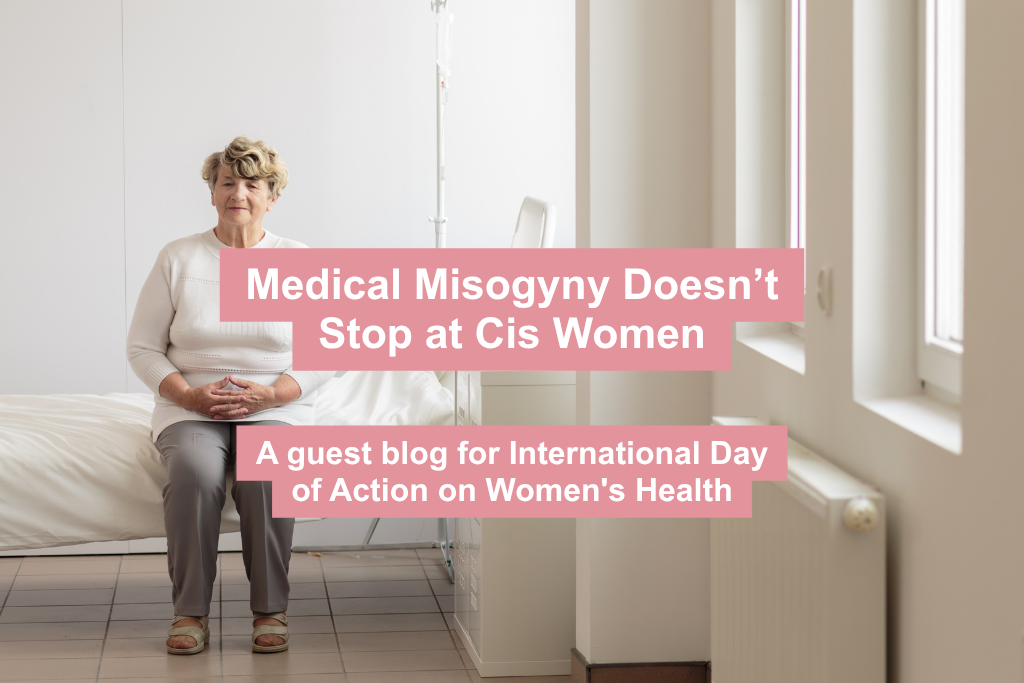
A guest blog for International Day of Action on Women’s Health
I remember sitting in at my GP, trying to explain that I was overwhelmed.
Not just stressed in the everyday sense, but struggling in a way that felt unmanageable and frightening. I was trying to explain that something deeper was wrong, that I wasn’t coping, that I needed help understanding why everything felt so difficult all the time.
Instead, I left with a week’s sick note.
The conversation quickly shifted away from what I was actually trying to say. I was made to feel emotional. Hormonal. Dramatic. As though stepping away from work for a few days would somehow resolve problems nobody had properly understood in the first place.
I remember leaving feeling embarrassed for having tried to explain myself. And over time, I realised how many women recognise that feeling immediately.
The feeling of walking out of a healthcare appointment unheard.
Of questioning whether you explained yourself badly.
Whether you were “too emotional.”
Whether speaking up made you difficult rather than deserving of care.
Across the UK, countless women know what it feels like not to be properly listened to in healthcare.
To be told to wait.
To “just manage.”
To come back later.
To push through pain that would likely be taken more seriously in somebody else.
And while these experiences are often framed as individual frustrations or unfortunate encounters, the evidence increasingly shows something much bigger.
These patterns are systemic.
Across the UK, women face significant barriers to accessing timely and appropriate healthcare.
More than half of women say their pain has been ignored or dismissed by healthcare professionals.
Women are less likely to receive adequate pain relief than men, despite experiencing higher rates of chronic pain.
Parliamentary inquiries have described these patterns as “medical misogyny,” highlighting how women are routinely left in pain, dismissed, or forced to wait years for diagnoses and treatment.
That reality is part of why conversations around medical misogyny matter so deeply to me, not only as an advocate, but as a trans person navigating many of the same healthcare systems.
Over time, both through my own experiences and through supporting others through NHS complaints, discrimination, and inaccessible healthcare, I began noticing something difficult to ignore:
The stories were different. But the feelings were often painfully familiar.
The exhaustion of constantly having to advocate just to access care.
The fear of not being believed.
The feeling of being treated as unreliable when speaking about your own body. The sense that dignity, autonomy, and even safety can become conditional once you fall outside of what healthcare systems expect a “normal” patient to look like.
Because many of the same systems that dismiss women’s pain and autonomy also create strikingly similar experiences for trans people.
For many trans people, healthcare becomes an exhausting process of justification.
Justifying your identity.
Justifying your body.
Justifying your need for care.
Justifying that you understand yourself well enough to be trusted.
Too often, support feels conditional on proving yourself first.
I’ve seen this both personally and professionally.
As a former director of TransLeeds, I supported trans and non-binary people navigating healthcare systems that frequently denied even the most basic forms of harm reduction support.
I advocated for people self-medicating hormones due to years-long NHS waiting lists, who simply wanted access to basic blood tests to monitor liver function and stay safe.
Not special treatment.
Not shortcuts.
Just basic preventative healthcare.
And underlying so many of these experiences is something many women will recognise immediately: the exhaustion of constantly having to advocate for yourself within systems that are supposed to care for you.
The fear of being labelled “difficult” for speaking up.
The pressure to remain calm and agreeable while fighting to be heard. The quiet calculation of whether challenging a professional will affect the care you receive afterwards.
This isn’t only about healthcare access.
It’s about bodily autonomy.
It’s about dignity.
It’s about what happens when patients stop being treated as active participants in their own care and instead become people systems happen to.
This is what happens when healthcare systems fail to prioritise communication, consent, and patient autonomy during moments of vulnerability.
Experiences like this are often treated as isolated incidents or misunderstandings. But they raise much bigger questions about power within healthcare settings, particularly for patients who are already marginalised, overwhelmed, or unable to advocate fully for themselves in the moment.
This is why advocacy matters so deeply.
Because not everybody enters healthcare spaces feeling safe enough, confident enough, or well enough to challenge professionals, ask questions, or assert boundaries. And too often, people are only truly listened to once they become persistent, distressed, or difficult to ignore.
No one should need to become an expert in self-advocacy simply to access humane treatment.
For many cis women and trans people, healthcare can become emotionally exhausting long before treatment itself even begins.
There is often a quiet pressure to appear calm, articulate, and reasonable enough to be taken seriously. To avoid seeming “dramatic”, “confused” or difficult when asking questions or advocating for your own needs.
And while misogyny and transphobia shape these experiences differently, both can create environments where people feel they must carefully manage how they present themselves in order to access respectful care.
That is why solidarity matters.
Not because trans people and cis women experience healthcare in exactly the same way. But systems built around narrow ideas of legitimacy, authority, and bodily autonomy often harm many different groups in strikingly similar ways.
Improving healthcare accessibility and inclusion for one group benefits everyone.
A healthcare system that listens properly to women’s pain is better for trans patients, too.
A healthcare system that respects the bodily autonomy of trans people will more readily listen to the voices of cis women too.
A healthcare system designed around communication, consent, and dignity benefits all patients, not only those who fit neatly into expectations.
Healthcare systems are designed by people, which means they can also be redesigned.
That means listening to patients the first time.
Embedding consent and bodily autonomy into every level of care.
Improving accessibility and communication.
Funding women’s health and trans healthcare properly.
And recognising that inclusion should never be treated as an optional extra.
Because healthcare should not depend on how well someone can fight to be believed. Care should not have to be earned.
About the author
 Paws Kesby is a universal independent advocate and founder of Pawsitive Action Leeds CIC. Their work spans NHS complaints, mental health advocacy, disability rights, and LGBTQ+ advocacy, with a focus on accessibility, inclusion, and systemic change.
Drawing from both professional advocacy and lived experience, they campaign for more person-centred and equitable healthcare systems.
@paws_kesby @pawsitiveactionleedscic