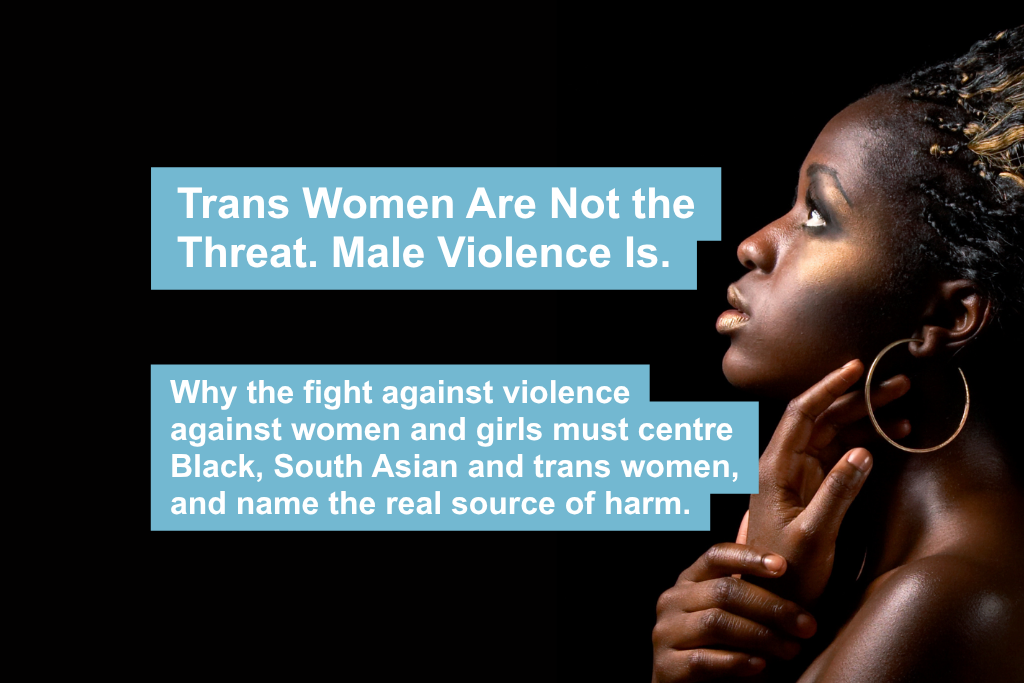
A guest blog by Saba Ali FRSA, for Black History Month
I have spent my working life in rooms where women’s safety is discussed. Police briefings, survivor forums, coalition meetings, community halls. As a queer South Asian woman with lived experience of cultural abuse, I have sat with survivors of domestic abuse, “honour” based abuse and conversion practices, and with families who have buried their daughters.
Not once has a survivor told me the danger in her life was a trans woman in a toilet. Every one of them could name the danger. It was a man. Usually a man she knew.
The evidence is not in dispute
In the UK, a woman is killed by a man roughly every three days, according to the Femicide Census. The latest Office for National Statistics homicide figures show that where a suspect was charged, 90% of female victims were killed by a man, and the most common killer of adult women was a partner or former partner.
This is not just my opinion. It is the pattern in every dataset we have. Male violence is the constant pattern of harm. It happens at home, in families, in workplaces and in institutions, and it is overwhelmingly committed by men women already know.
Who pays the highest price
Violence against women and girls does not land evenly. In London in 2022, nine of the 21 women and girls killed in femicides recorded by the Metropolitan Police were Black. That is 43% of victims, in a city where Black women make up around 14% of the population.
Across the UK, the Femicide Census found police could provide the ethnicity of only around 40% of victims. When institutions do not even count us, they cannot protect us.
For South Asian women, the danger often arrives dressed as family, culture or “honour”. Coercive control. Forced marriage. Conversion practices aimed at queer daughters. I have watched these women be failed twice, first by the men who harm them, and then by services that see their culture before their safety, or that treat their race, gender and sexuality as separate problems to be passed between separate teams.
Trans women are targets, not threats
Now look at the people being cast as the danger. Galop’s Transphobic Hate Crime Report found that in a single year, a quarter of trans people had experienced or been threatened with physical assault, and nearly one in five with sexual assault. More than half felt less able to leave their own homes.
Police in England and Wales recorded 3,809 transgender identity hate crimes in the year to March 2025, and that figure leaves out the Metropolitan Police entirely. Galop’s research shows only around one in eight LGBT+ people report hate crime to the police at all, with over half believing the police would not act. The real number is far higher as we know many do not report crime through lack of trust in the police.
When trans people experience domestic abuse, they face it more alone. Galop found three in five LGBT+ victims of domestic abuse receive no professional help, and only one in eight trans and non-binary victims receive support from their family. Most LGBT+ victims live in parts of the country with no specialist LGBT+ service to turn to.
Trans women of colour stand where racism, misogyny and transphobia meet. They are among the most targeted women in this country. They are not the threat. They are targets, victims cloaked and shamed by others.
A distraction that costs lives
Every hour of airtime spent on who uses which toilet is an hour not spent asking why so few rapes reach a courtroom, why survivors must report again and again before anyone acts, and why “by and for” services, run by and for Black, minoritised and LGBT+ survivors, are fighting to keep their doors open.
Excluding trans women from women’s spaces does not make a single woman safer. It shrinks the circle of who counts as a woman worth protecting, and it hands cover to the men who are doing the harm.
What I am asking for
- Name male violence as the threat, plainly, in every policy, every briefing and every headline about women’s safety.
- Fund “by and for” services led by Black, minoritised and LGBT+ women, properly and for the long term, because they reach survivors the system never will.
- Record the ethnicity, sexuality and gender identity of victims, so that no woman disappears from the data. Trans women deserve to be seen and validated.
- And stop scapegoating trans women. There is no evidence that they are a danger to us. There is a mountain of evidence that they are in danger alongside us.
Not in my name
Women’s safety is not a competition, and my safety will never be bought with someone else’s rights.
I stand with the Black and South Asian women whose deaths go uncounted, with the survivors still waiting to be believed, and with my trans sisters, who deserve to be safe too.
About the author
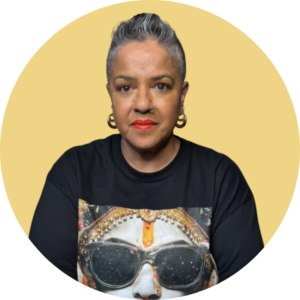 Saba Ali FRSA is an equalities advocate, social justice activist and human rights campaigner, and a Critical Friend to the Metropolitan Police Service.
She chairs the Ban Conversion Practices Coalition, is LGBT+ and Women’s Lead for the Alliance for Police Accountability, and sits on the advisory board of the Centre for the Prevention of VAWG. She was named DIVA Inspirational Role Model of the Year 2025 and LoveQueers Trailblazer 2025.
Find Saba on Instagram at: @sabacelebritypa